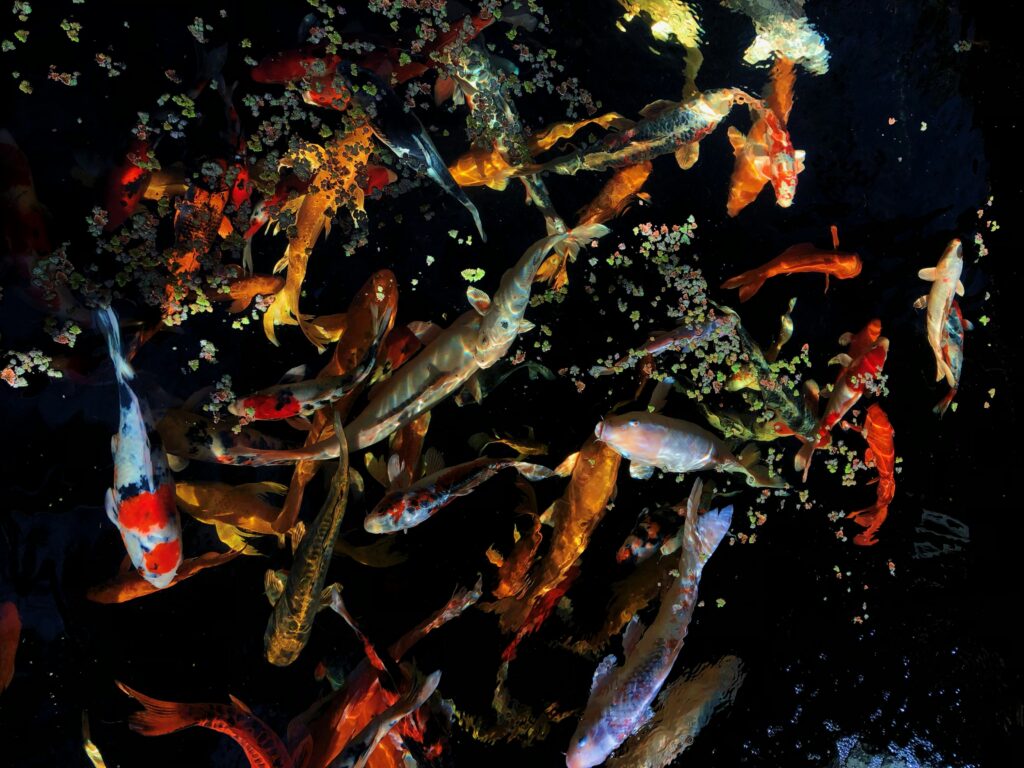
In Brooklyn, Nova Scotia, seven tanks holding 60,000 litres of water and about 2,500 live koi feed the medical cannabis that Wellford Canada grows without synthetic fertilizers or chemical pesticides. The system goes back to the facility’s original founders, who researched and tested the aquaponic process at Acadia University in 2018, according to Todd Crutchlow, Head of Wellford Canada.
Their research found that nutrient-rich water from the koi, combined with the natural relationship between soil microorganisms and plant roots, could support a sustainable, aquaculture-based cultivation model and give the plants the nutrients they need without synthetic fertilizers or pesticides.
“As a result, our cultivars can express strong genetic potential, supporting high yields, bud density, terpene expression, and potency while using less water and energy than conventional indoor cultivation methods,” says Todd. “For registered medical patients, this supports access to consistent, high-quality cannabis produced through a sustainable cultivation model and controlled quality systems.”
Wellford estimates the savings at 90% of the water and 50% of the energy of conventional indoor cultivation, figures that come from internal calculations and operating observations, Todd explains. “The figures reflect the efficiencies achieved through our closed-loop aquaponic model, organic cultivation practices, and integrated resource-management approach. Our Clean Green Certified® status further supports the sustainability of the system while confirming that these efficiencies are achieved without compromising product quality or effectiveness.”
From seed to 2,500 kilos
The Health Canada licensed facility covers 65,000 square feet on 4 acres of land, with an option to buy 40 more acres if Wellford needs to expand. Its capacity is about 2,500 kg of dried flower a year, from 16,000 square feet of flowering rooms, and the rest of the building houses cultivation support, post-production, extraction, storage, fulfilment and offices. The Government of Nova Scotia licenses the aquaponics system as a land-based aquaculture facility. “Unlike standard aquaculture operations where fish are harvested for food, we feed and maintain the koi stock as a permanent, cared-for living component of its licensed ecological design,” Todd points out.
Wellford starts from seed, and the team runs phenotype selection regularly to find the cultivars that best support the health and wellness needs of registered medical patients. Wellford Canada has produced and sold cannabis in Canada since 2018 and has refined its portfolio through cultivation experience, customer feedback and performance data along the way. “This approach has allowed the company to balance ease and efficiency of cultivation with selection of medically beneficial attributes (as identified via real-world patient experience data),” Todd remarks.
Living soil under GMP
In the soil, beneficial bacteria and fungi break down organic material, and the koi water carries the nutrients through what Todd describes as an integrated, sustainable cycle. “Our process consistently produces compliant results without post-harvest irradiation or remediation,” says Todd.
Living soil changes from batch to batch, which Todd describes as the inherent variability of an organic ecosystem. “Living soil relies on a dynamic ecosystem of microorganisms, so standard chemical testing alone is insufficient,” Todd explains. With an ever-changing web of beneficial microbes and organic processes at work, managing batch consistency looks very different from a synthetic salt-based setup, according to Todd. Wellford validates each batch by monitoring biological activity, chemical nutrients and physical properties throughout the plant’s life cycle, then links those results to cultivation records, quality-control review and batch-release criteria. “This approach allows variability in the living system to be managed within a controlled GMP framework rather than treated as an uncontrolled input,” he adds.
The fish sit inside that framework too. “Because we use a dual-system aquaponics approach, any decrease or loss in the koi population would not automatically affect a medical cannabis crop,” says Todd. A fish-health issue would trigger documented contingency and backup protocols, which isolate the water-management issue, protect the plant-growth environment and put any affected crop through quality review before it moves on, and the company keeps its aquaponic, water-related and corrective and preventive action procedures in its GMP documentation.
Inspectors and Germany
The 2026 inspection was more stringent than the first one in 2023, according to Todd. “In 2023, the inspectors assessed the facility primarily as a Health Canada-licensed medical cannabis site seeking EU-GMP certification. By 2026, the inspection approach had evolved, with greater emphasis on pharmaceutical-grade systems, quality oversight, validation, documentation, and overall GMP maturity,” he explains. The shift reflected updated regulatory expectations and a stricter reading of EU-GMP requirements for medical cannabis manufacturing, Todd adds.
Needless to say, every EU-GMP producer has its eyes on Germany, even more so after this summer. German medical cannabis flower came off statutory health insurance reimbursement on July 30, and distribution has shifted toward private telemedicine and self-pay clinics, Todd points out. “We’re monitoring the transition closely and expect flower volumes to shift away from insurance-funded pharmacy channels and toward higher-volume private clinic networks.”
This article was published on MMJ Daily on 3 October 2026